2025 Sustainability Report
Responsible Investments
As an Investor
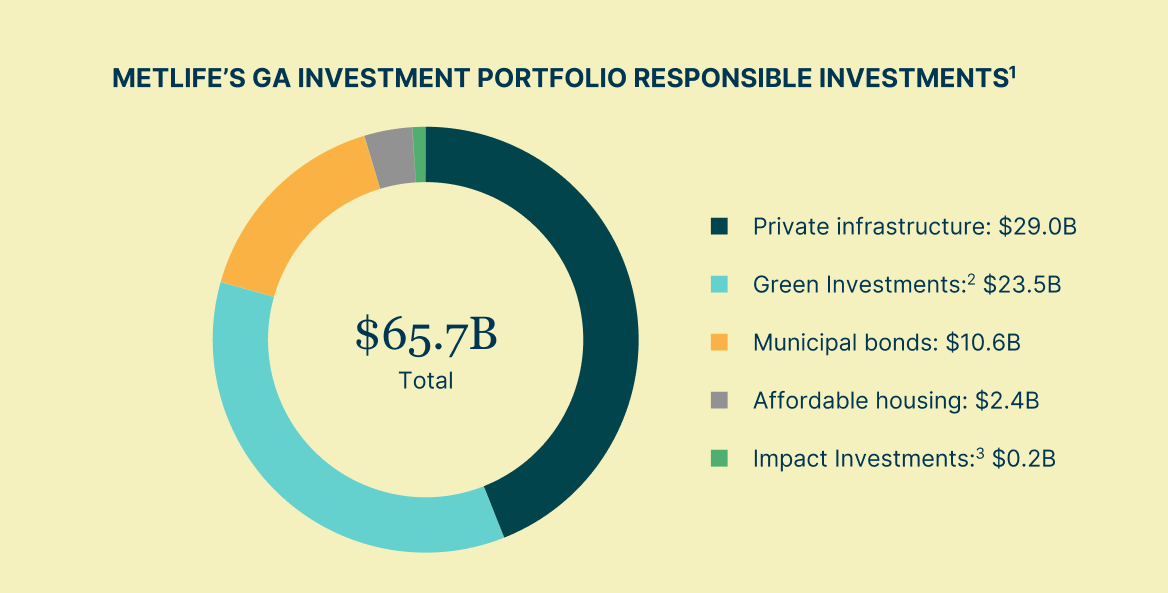
MetLife’s responsible investments seek to achieve a market financial return while considering social and/or environmental benefits that help create healthier communities and a more sustainable environment. Responsible investments focus on the core areas of infrastructure investments, green investments, municipal bonds, affordable housing and impact investments.
Affordable Housing
MetLife invests in high-quality housing projects that seek to build financial health and bring benefits to communities. These housing investments involve partnering with nonprofit organizations that provide below-market rental homes to low-income earners.
Affordable housing is not just for social good—it is a financially material and strategically aligned investment category that can help enhance community well‑being while delivering stable long‑term value for investors. This relevance is reflected in MetLife’s financing of a portfolio of U.S. Department of Housing and Urban Development-supported affordable housing properties across several states. Proceeds from the transaction were used to maintain and support ongoing operations of existing properties, and funded critical preservation needs to help maintain long-term affordability for residents.
Infrastructure
MetLife invests in infrastructure projects that create jobs, support resilient communities and provide economic benefits. These projects could include building or upgrading airports, ports, roads, pipelines, transmission lines and power generation. The impact of this strategy is illustrated through projects that demonstrate how long‑term infrastructure investments can strengthen connectivity, accelerate the clean‑energy transition and deliver tangible benefits for communities.
Infrastructure investment examples include:
- MetLife is helping to finance Portugal’s first high‑speed rail between the country’s two largest cities, Lisbon and Porto. The line is expected to significantly reduce travel time while improving regional connectivity for millions of passengers annually.4 The project seeks to deliver meaningful social, economic and environmental benefits, including lower emissions, as it is expected to encourage demand to shift from road and air travel to more sustainable rail.
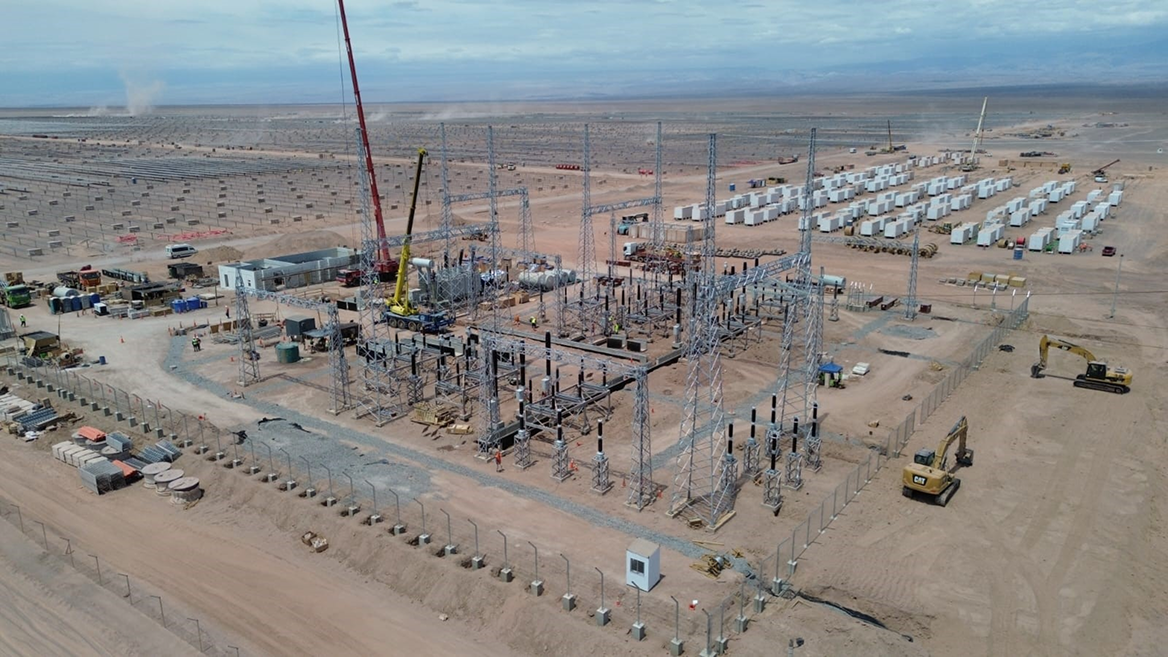
- MetLife was also a major lender in Project Aurora, a large solar and battery storage initiative in Chile’s Tarapacá Region. The project aims to advance the country’s clean energy transition by replacing coal‑based generation with renewable power and strengthening grid reliability through storage that enables solar energy delivery, even after sunset.
Municipal Bonds
MetLife’s municipal bond investments support infrastructure, education and community services spanning 46 U.S. states and Washington, D.C. The proceeds of these investments can be used to finance or refinance environmental, water and clean energy projects, as well as projects with anticipated positive social outcomes, such as affordable public housing and school building revitalization.
- MetLife invested in the Idaho Housing and Finance Association (IHFA), a self‑supporting financial institution that expands affordable housing and strengthens Idaho communities by providing homeownership lending, rental assistance, homelessness support and multifamily finance. With deep expertise in real estate development, finance and tenant services, IHFA is committed to making safe, stable and affordable housing accessible to all Idahoans.
Green Investments
MetLife invests in companies and projects that focus on the conservation of natural resources, the production and discovery of alternative energy sources, the implementation of clean air and water projects and other environmentally conscious business practices. These investments demonstrate how MetLife advances our New Frontier strategy by deploying capital into projects that seek to strengthen environmental resilience, reduce long‑term risk and support sustainable value creation.
For example:
- MetLife installed solar panels on the rooftop of its Fairmont Hotel investment in Washington, D.C. The solar panels generate renewable electricity that supplies the local power grid and decreases reliance on fossil fuels. The installation supports MetLife’s broader efforts to reduce its overall carbon footprint by contributing to a greener grid.
- As part of a financing agreement, MetLife partnered with Resource Management Service, LLC, on behalf of investors to enroll thousands of acres in a Working Forest Conservation Easement (WFCE) funded by the U.S. Forest Service in partnership with South Carolina Forest Commission. The WFCE preserves sensitive lands vital to clean water, wildlife habitat and recreational opportunities, while also supporting rural economies dependent on timber resources for economic development.
Impact Investments
Since the MetLife Impact Investment program's inception in 1984, MetLife has committed approximately $1 billion, with an average of $40.9 million annually for the past 10 years. The program's investments are made with the intent to generate positive financial returns alongside measurable social and environmental outcomes, such as supporting financial health and climate resilience. These impact investments are originated solely for MetLife and MetLife Foundation. See For Our Communities for more information about MetLife Foundation’s work.
- Through our GA portfolio, MetLife is a lender to the Lendable Micro, Small and Medium Enterprises Fintech Credit Fund II, which aims to expand financing for micro, small and medium enterprises and consumers by lending to fintechs in frontier and emerging markets. Lendable’s work supports access to fair financial resources that unlock consistent access to food, clean water, electricity, shelter, education and income.